 Creade
Did the ions blow your hair? Distinguishing ions from heat damage.
0Can An Ionic Hair Dryer Damage Hair? Learn How Ions Differ From Heat Exposure, What Drying Studies Show, And How Temperature, Distance, And Time Affect Risk.
View detailsSearch the whole station
Select the furry blow-blower to see if it can dry up at the right temperature in the shape of the target. Soft hair requires low wind speeds that are easily controlled, natural rolls need to be kept in curls, and air currents need to be concentrated. The “negative ion more” cannot answer which one is better for you alone.
Search for best blow dryer for Frizz, the practical solution is what kind of wind blower reduces post-blow disorder while avoiding repeated heating in pursuit of smoother. The answer needs to be a combination of hair and shape objectives. For branders, distributors and Sharon procurement personnel, this also means that when selecting a sample machine, the type of hair of the service should be determined and the parameters compared.
Also, hair is not properly surfaced and the issues to be addressed may vary.
The ease with which thin hairs fly, accompanied by static electricity, is one situation; when natural curls are blown, the contours spread apart, and the contours become messy, the other. There are also hairs that are drifting or frequent heat formations and that have rough hair tails, which, even if temporarily blown, cannot be judged to have recovered.
The reduction of electrostatic power, the retention of curls and the control of heat damage require separate validation.
Therefore, the selection should be preceded by the targeting of the target: whether to keep the natural roll or to blow it straight? Both may require different annexes and air currents. Dyson ‘ s symmetrical specifications also provide separate descriptions of the collection, proliferation hoods and smoothing-out attachments, each with different configuration tasks. This is an example of the use of the annexes and cannot be directly extended to all machine-type performance conclusions. Source: Dyson use instructions
It is not only the highest temperature or the robustness of the hot wind that determines whether a wind blower is suitable for hairy hair. It is even more worthwhile to check whether the cooling slot is available, whether temperature and wind speed can be adjusted separately, and whether it is still easy to control drying processes with commonly used attachments.
Temperature, distance and time of stay have combined effects on filament heating. A 2011 beam study compared combinations of distance, temperature and dry time and, after repeated treatment, researchers observed more visible surface damage due to filament under higher temperature conditions. As these conditions change simultaneously, the study cannot be used to develop a “safe temperature” for all blowers. Source: Summary of original studies
It is clear about the actual revelation of the selection machine: do not think of it as a better anti-heat. The ability to dry with lower heat is more of a reference value than having a high maximum temperature for drifting, soft or crude hair. The American Society for Dermatology has also recommended the use of minimum heat sheets for blowers to reduce hair damage. Source: American Society of Dermatology Recommendations
The “smart constant temperature” in procurement information needs to be further checked. The manufacturer was asked whether it measured the temperature of the vent or the temperature at the distance; which wind speed was used, whether wind mouths were installed, and how long after operation. Figures cannot be compared directly horizontally, depending on the location of the measurements.
Fragility and straightness are not the same goal. Natural volumes can retain volume and volume while reducing dispersive wiring, while straight-on-the-shoring requires more targeted zonal control.
The table below serves as the starting point for the selection machine and the sample, and does not mean that the effects of a given product have been validated.
Release and target.
The difference between a mouth-to-face and a proliferation hood lies in the distribution of air currents. Pooled mouths facilitate the formation of local beams; diffuse wind masks spread the currents and are used for milder dry hairs. Dyson ‘ s model description clearly lists these uses, but the effect still depends on how the annex is designed and used. Source: Dyson Annex Note
The annex will also check the actual packaging. The proliferation hood is displayed on the page and does not necessarily mean that the selected package contains it. For products oriented to the wholesale market, compatibility, boxing and repurchase channels should be confirmed prior to ordering.
The negative ion is a common advocacy focus for a manic blow-blower. More explicit and verifiable functional representations help reduce static power. For example, Dyson ‘ s technical specifications describe the use of the ion generator as a reduction in hair electrostatic and do not define it as a silk repair function. Source: Dyson Technical Specification
This distinction affects the selection of purchases.
If the target problem is mainly static ejection, the ion function is worth including in the comparison. If the natural rolls are blown out by the current, the low wind speed and proliferation attachments are still checked; if the hair is damaged, the number of ions cannot be used as a substitute for temperature management.
When looking at “billions of negative ions”, ask first what the measurement conditions are: what units are, how far away are the probes from the vent, which slots are used, and whether attachments are installed. In the absence of this information, the two ion figures, even if very different, are not sufficient to prove which one is more smooth.
Similarly, the presence of a cold-winded slot cannot be a direct proof of long-term impatience. The sample should check whether it is convenient to switch and whether the cold wind current is suitable for the configuration and evaluate whether it is useful for the complete operation.
For overseas branders and distributors, “suitable for manic hair” requires sample validation. The list of parameters allows for the screening of candidate products and ultimately depends on the performance of the target.
The following is a set of recommended methodologies for internal comparisons, not a uniform industry standard.
The type of beam, length, weight, washing procedures and initial humidity are first fixed. Floating hairs should be compared with unchemically treated hairs; the hair products should be used in a consistent manner.
The entire operation is then recorded: the attachments used, temperature and wind spacing slots, the winding distance, dry time, and whether a comb is used. The comparison is the result that can be repeated under normal use, rather than the smoothest picture taken at one time.
Evaluations should also be recorded separately:
When the manufacturer provides “a certain percentage reduction of impatience”, it should provide both the target, the sample mass, the evaluation method and the annex conditions. Improvements compared to unattached use cannot be written directly in favour of other brands; the result of a certain type of beam does not automatically cover the entire product.
An impulsive blow-blower suitable for soft hair, with a physically usable low wind speed and low heat slot; products oriented towards natural rolls, with priority given to the effects of proliferation attachments and tape retention; and demand for service blow-outs, with the time required to check the sense of control and complete configuration of the mouth.
When the budget is limited, verify whether the temperature, air flow and attachment match the target user before paying for additional functions. For the B2B selection, the next step can be very specific: select a target mass and a model result, comparing the candidate with the same conditions. This will make it possible to determine whether the “facilitative” is reflected in product performance.
Can An Ionic Hair Dryer Damage Hair? Learn How Ions Differ From Heat Exposure, What Drying Studies Show, And How Temperature, Distance, And Time Affect Risk.
View details
The Most Immediate Benefit Of An Anion Hair Dryer Is That It Reduces Flyaways Caused By Static Electricity. After Brushing Dry Hair, The Flyaways On The Crown
View details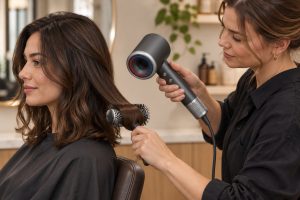
Learn How To Curl Hair With A Blow Dryer And Round Brush, Set Loose Waves With Cool Air, And Use A Diffuser To Keep Your Natural Curls Defined As They Dry.
View details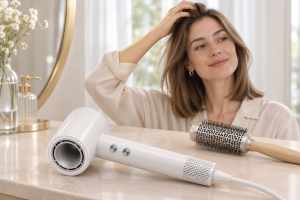
Is An Ionic Hair Dryer Good For Fine Hair? Learn How Ion Settings Affect Smoothness And Volume, Why Heat Control Matters, And How To Compare Results At Home.
View details