 Creade
Did the ions blow your hair? Distinguishing ions from heat damage.
0Can An Ionic Hair Dryer Damage Hair? Learn How Ions Differ From Heat Exposure, What Drying Studies Show, And How Temperature, Distance, And Time Affect Risk.
View detailsSearch the whole station
The most immediate benefit of an anion hair dryer is that it reduces flyaways caused by static electricity. After brushing dry hair, the flyaways on the crown and ends tend to stick out; this is the situation where you should definitely try the ion function. It helps hair look more sleek and manageable; as for whether it can dry faster, that depends on the specific model’s drying performance. You can’t tell how many minutes it can save just from the three words “negative ions” on the body. Negative Ion Hair Dryer Instruction Manual · IEC 61855:2022 Performance Test Methods
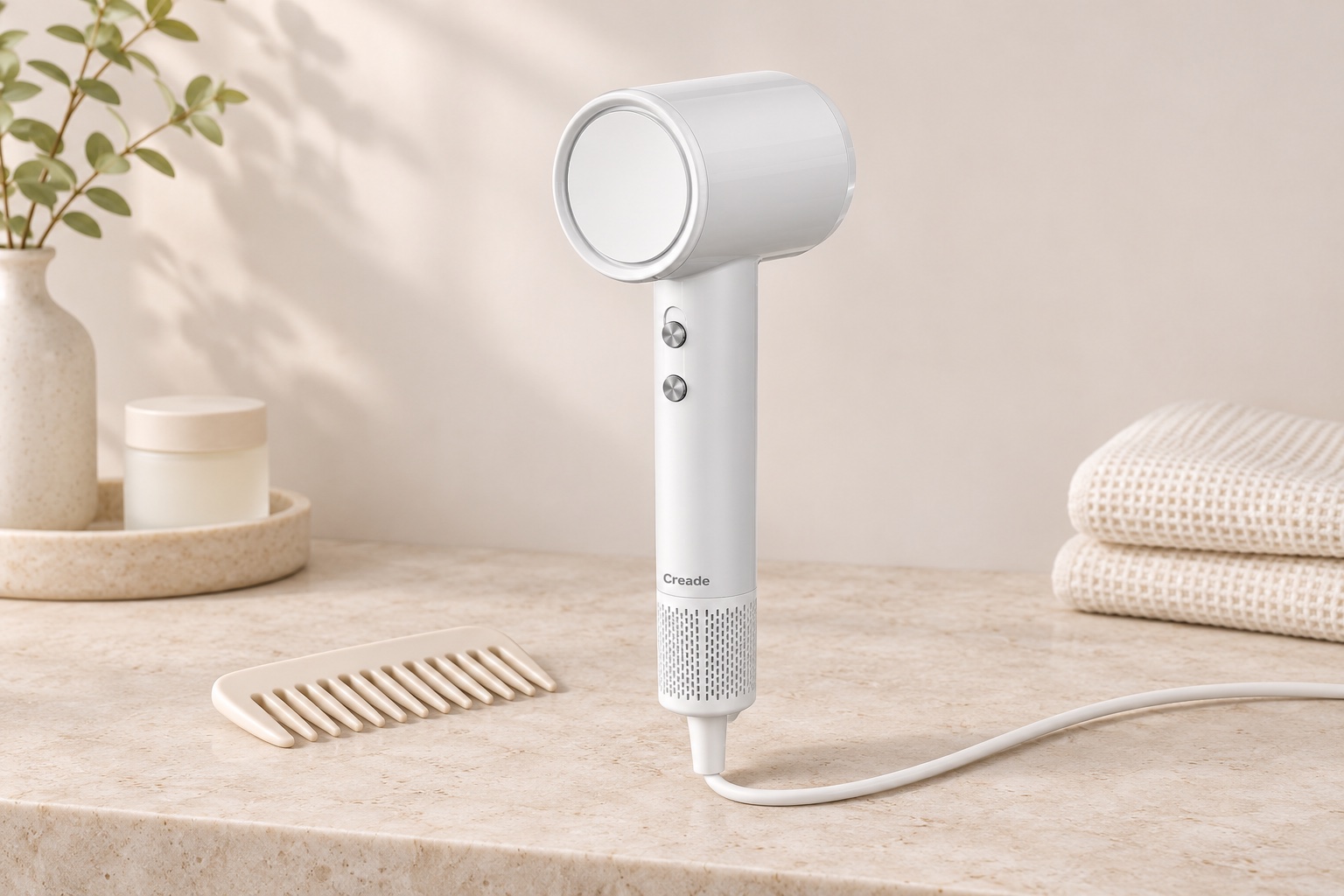
After hair comes into contact with and rubs against a comb, static electricity may build up in the strands. Like charges repel each other, so hairs that were originally close together tend to spread apart. Negative-ion hair dryers release negatively charged ions into the airflow; when hair strands accumulate positive charges, these negative ions can neutralize some of them, reducing the repulsion between the strands. The changes you can observe are quite specific: after blow-drying and combing, there may be fewer stray hairs around the edges of the curled section. Study of Hair Surface Charge · Explanation of Negative Ion Function
When your whole head of hair frizzes up in humid weather, that’s a whole different story. Hair strands absorb moisture from the air, which can cause the volume and shape of the hair to change. Even if negative ions reduce the number of flyaways on freshly blow-dried hair, that doesn’t mean your style will hold up better against humidity once you’re out and about. Similarly, it looks smoother after blow-drying, but this only indicates a change in appearance and does not prove that damaged cuticles have been repaired. Relative Humidity and Hair Bundle Volume Test · Study on Drying Conditions and Hair Surface Damage
Looking at the concentration alone, I can’t answer. IEC 61855:2022 separates the testing of two performance parameters: the drying rate is determined by measuring how much water evaporates from a wet test cloth within a specified time, while the negative ion concentration is measured with an instrument positioned near the air outlet or ion emission port at a designated setting. The former indicates how quickly the entire unit drains water under specified conditions, while the latter indicates the number of negative ions at the measurement point. The two sets of data are not interchangeable, and the drying rate measured on the test fabric cannot be directly converted into the time it would take you to dry your entire head of hair. IEC 61855:2022, Sections 5.6 and 5.7
A hair dryer with negative ions may indeed dry your hair faster than an older model, but when you replace it, the airflow, outlet temperature, and nozzle may all change as well. To determine whether the emerging fraction originates from ion functionality, keep all other conditions as consistent as possible and simply switch the ion selector.
If the machine has a separate ion switch, try it once after each of two shampoos under similar conditions. Try to keep the towels at a similar level of moisture after soaking, and use the same hair care products, concentrator nozzle, temperature, airflow speed, and blow-drying distance. In both cases, drying is judged by the same standard: for example, the roots and inner layers no longer feel damp to the touch. Record the time, then comb your hair again with the same comb and, under the same lighting conditions, observe how many split ends are standing up at the crown and along the ends of your hair. This is a simple comparison to assess individual results. Instruction manual for models with individual ion switches
If, after using an ionic setting, you have less flyaway hair and the styling time is about the same, the benefit is that your hair lies smoother. If you can’t tell the difference either time, this feature probably won’t make much of a difference to your usual blowing technique. To keep your roots looking voluminous, take a quick look at them while you’re blow-drying: how much flyaway hair you’ve tamed and whether the style still has enough lift are things you can judge right in the mirror.
Can An Ionic Hair Dryer Damage Hair? Learn How Ions Differ From Heat Exposure, What Drying Studies Show, And How Temperature, Distance, And Time Affect Risk.
View details
Find The Best Blow Dryer For Frizz. Compare Heat Control, Airflow And Attachments For Fine, Thick Or Curly Hair, And Learn How To Evaluate Anti-Frizz Claims.
View details
Learn How To Curl Hair With A Blow Dryer And Round Brush, Set Loose Waves With Cool Air, And Use A Diffuser To Keep Your Natural Curls Defined As They Dry.
View details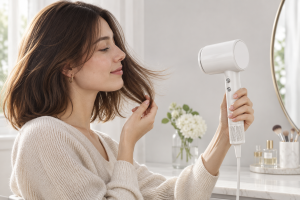
The search for “blow dryer that doesn't damage hair” depends first on whether the wind blower is able to dry at a lower temperature and whether it needs to be used close to the hair and repeatedly heat the same part. It is not possible to confirm ...
View details