 Creade
What Are the Benefits of a Negative-Ion Hair Dryer?
0The Most Immediate Benefit Of An Anion Hair Dryer Is That It Reduces Flyaways Caused By Static Electricity. After Brushing Dry Hair, The Flyaways On The Crown
View detailsSearch the whole station
A negative ion blower can be suitable for soft hair, especially when electrostatic, fractured, and wants smoother hair after blowing. But if your hair is covered with a skin, and the blow is mainly intended to increase the root support, it cannot be determined by “negative ion” alone. A machine with a stand-alone ion switch allows you to adjust to the shape target: it needs to start when it slides, it tries to close when it pursues floating. Some of the product statements explicitly use this functional arrangement, but the actual effects need to be judged in the form of a combination of hair and blowout. Source: BaBylissPRO BNTMB9100C User Note
The key is to distinguish between three things: reducing fragmentation, increasing fowl and controlling heat damage. They need to be judged separately.
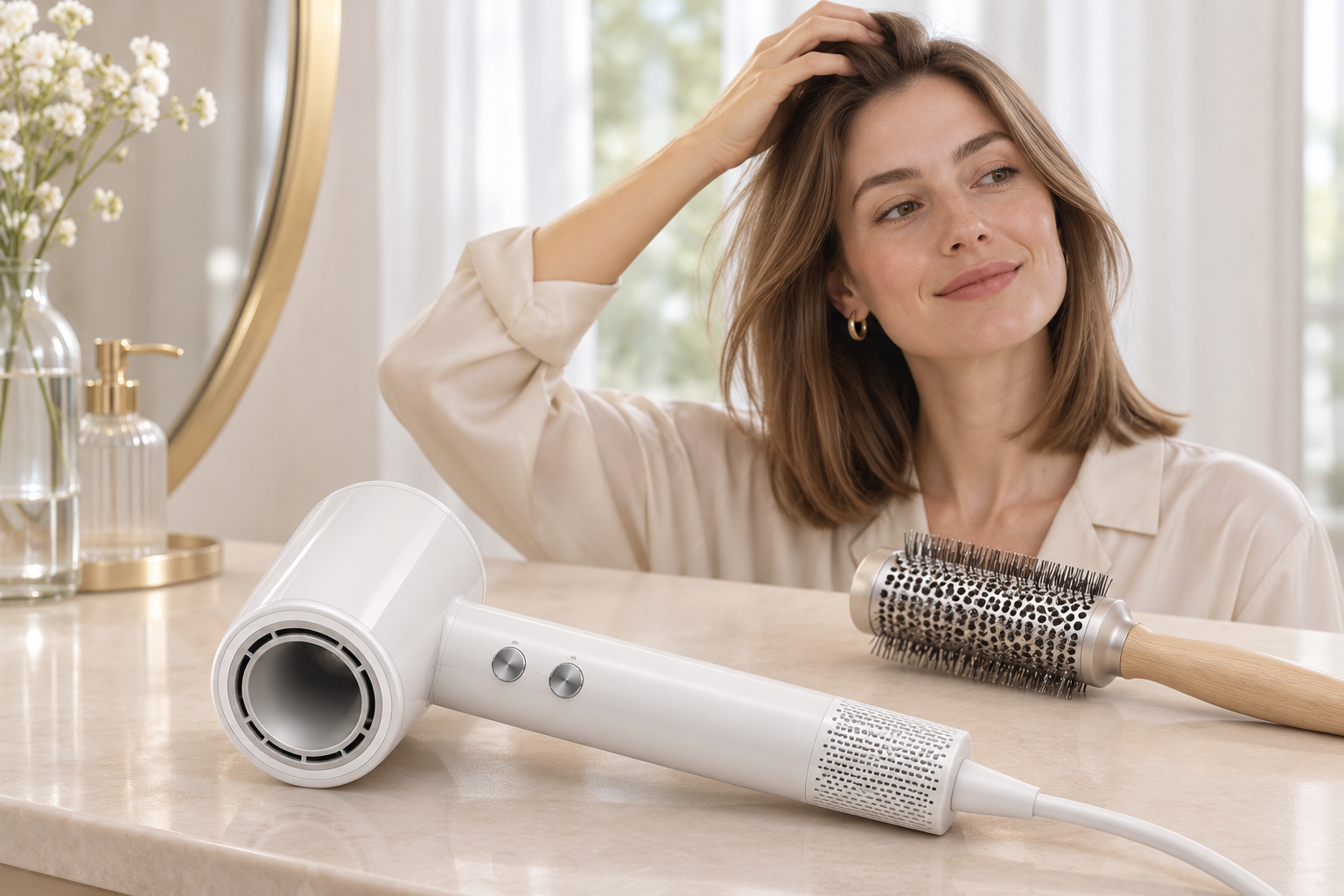
In the English keyword, fine hair refers mainly to thin hair and does not amount to a small number of hair. Fine hair can also be condensed and may have natural rolls. The word “soft” alone does not determine the appropriateness of the same blow-out effect.
We can look at the problems we want first:
The actual performance of the hair, the applicable judgment of the negative ion function, and the focus of the blow.
It’s worth trying.
The hair is smooth, but the head is flat, and it doesn’t have to be conditioned on a negative ion.
With a hair-skin and a hair tail, it’s a bit of a jerk.
The hair is drifting, dry or easy to break.
This table, which is used to determine the direction of the trial, does not mean that certain types of hair are bound to achieve the same result. In particular, hairs such as “light, small, straight” and “small, multiple, curly” may differ in size and texture if used in the same blow-blower.
The negative ion function helps to reduce electrostatic accumulation and the resulting filaments by releasing negative ion. Philip HP 4996/00 ‘ s instructions use the ion function to reduce electrostatic and ejection; Conair ‘ s fine blower instructions also include the neutral charge and the reduction of fly-off as ion functions. Source: Philip HP 4996/00 Usage instructions, Conair 470R Usage instructions
For soft hair, the focus is on whether this change is consistent with your modeling goals. The previously scattered hairlines have become so neat that the outer contours may seem more condensed; this is to be seen separately from whether the roots have been blown up.
It cannot be asserted that “negative ion must cause the thinness to collapse”. The reduction of static power does not mean the loss of all support for the root, much less the loss of the hair. In turn, a silky surface does not mean a thicker single hair, an increased volume of hair, or that the damage has been repaired.
For those who wish their heads to be loose and smooth, a single “gooder” standard is not sufficient. The root and tailing state should be seen simultaneously.
It is easier to compare with independent switches.
The BaBylissPRO BNTMB9100C instructions use the ion opening mode for a more smooth effect and the closed mode for volume and texture increases. This guidance to the manufacturer of the model explains why the ion control is related to the configuration; it does not prove that all the negative ion blowers perform the same on the thin hair. Source: BaBylissPRO BNTMB9100C User Note
Therefore, if you often switch between a smooth, straight hair and a fluffy shape, priority can be given to checking whether the ion function is closed independently. The cold wind key is not used as an ion switch: one controls the temperature of the wind and the other controls the ion function, the composition being based on the model description.
It also needs to be perfected. Conair’s mini-driver instructions, while introducing ion functions, also provide a separate method of adding root. This means that a wind blower with an ion function can still be used for puffing and that the effects of the finished product cannot be predicted by functional names alone. Source: Conair 470R User Note
If the machine does not have an ion switch, it does not need to be replaced immediately. Let’s see if it can blow out the root profile you need at the right temperature and wind speed; if the results are satisfactory, it’s less urgent to shut down.
Sliding effects and heat damage are two evaluation dimensions. The presence of an ion function does not prove that the temperature of the wind is lower or that the same position is exposed to prolonged heat without wiring.
An experiment published in Annals of Dermatology conducted 30 detergent and dry treatments comparing the combination of distance, temperature and dry time. It was observed that the overall damage to hair expression surfaces was more pronounced when temperatures rose. The experiment did not compare the negative ion opening and closing, nor was it specific to the soft hair, so that it could not be used to prove the hair protection of the negative ion or set a safe temperature for all blowers. Source: Hair Shaft Damage from Heat and Drying Time of Hair Dryer
When actually used, keep the heat under control. The American Society of Dermatology has recommended the use of minimum temperature slots for blowers; product instructions also usually require continuous mobile blowers to avoid the concentration of hot winds at the same location for long periods of time. Source: American Society of Dermatology hair care advice, BaBylissPRO use instructions
For fine hairs that are already fertilized, dry or breakable, it is important to first check the availability of the minimum temperature range, the ease of wind speed control and then assess the appearance changes associated with the negative ion. Don’t heat the dry end of the hair in pursuit of smoother hands.
If the wind blower allows a stand-alone switch ion, a daily round-up can be performed. It’s not a laboratory test, but it helps you judge the effects of personal use.
I’m sorry. When there is an uncomfortable heat, cool or adjust distance. Do not continue to heat up to complete the comparison.
This function meets your needs when the ion is activated and the dispersing and rooting are sustained. If the change is merely a better tail and the contours on the top of the head are not as expected, an attempt can be made to close the ion to complete the rooting and then process the tail as required.
The small difference between the two models is also a useful result. It is even more noteworthy at this time that it may be the minimum temperature, wind speed control and the smoothness of the blow. A negative ion blower suitable for soft hair should give you the smoothness you need, while retaining the desired hair profile.
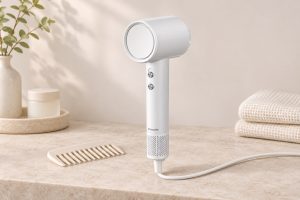
The Most Immediate Benefit Of An Anion Hair Dryer Is That It Reduces Flyaways Caused By Static Electricity. After Brushing Dry Hair, The Flyaways On The Crown
View details
The search for “blow dryer that doesn't damage hair” depends first on whether the wind blower is able to dry at a lower temperature and whether it needs to be used close to the hair and repeatedly heat the same part. It is not possible to confirm ...
View details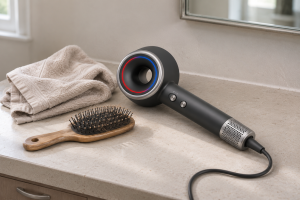
Find The Best Blow Dryer For Frizz. Compare Heat Control, Airflow And Attachments For Fine, Thick Or Curly Hair, And Learn How To Evaluate Anti-Frizz Claims.
View details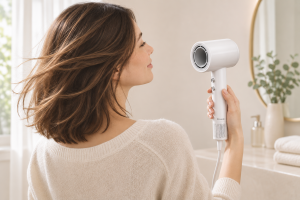
Can An Ionic Hair Dryer Damage Hair? Learn How Ions Differ From Heat Exposure, What Drying Studies Show, And How Temperature, Distance, And Time Affect Risk.
View details